KeyPRP® Injection Therapy
Customisable platelet-rich plasma designed for precision biologic treatments
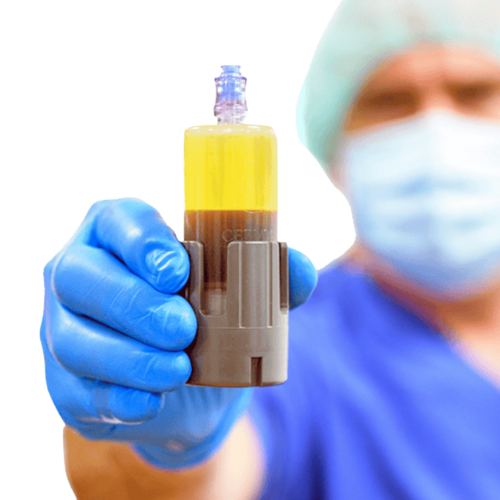
Dose matters. Cell composition matters.
KeyPRP is not “a type of PRP” – it is a platform that allows clinicians to define the biologic they want to deliver.
Innovative Technology
A controlled, validated approach to PRP preparation
KeyPRP produces an autologous biologic composed of platelets, growth factors, and selected leukocyte populations derived from the patient’s own blood. Its defining feature is the ability to customise both concentration and cell balance.
In practical terms, this allows clinicians to move beyond generic PRP and towards treatments that are aligned with tissue type, pathology, and treatment goals.
KeyPRP uses a patented, density‑based centrifugation process to separate whole blood into its constituent cellular components. This approach allows targeted capture of:
- Platelets and platelet‑derived growth factors
- Monocytes and lymphocytes (mononuclear cells)
- Controlled inclusion or reduction of neutrophils
Clinical Rationale
Why cell composition matters
PRP is not a single entity. The biological behaviour of a PRP injection is influenced by:
- Platelet concentration and dose
- The balance of mononuclear cells and granulocytes
- The inflammatory or regenerative intent of treatment
Monocytes and lymphocytes play key roles in immune modulation, tissue repair signalling, and longer‑term biological response. Neutrophils, while important in acute injury, are also associated with inflammatory cascades that may not be desirable in all indications.
KEYPRP allows clinicians to take these differences into account, tailoring the biologic to the clinical scenario rather than accepting a fixed cellular profile.
Watch the double spin KeyPRP technique
Clinical and Scientific Data Review
KeyPRP has been independently tested and validated by external laboratories and experts in regenerative medicine. Its patented process allows clinicians to reliably generate distinct PRP profiles, depending on clinical intent and protocol selection.
Validated performance characteristics include:
- Platelet concentration:
Demonstrated enrichment ranging from >6× (single spin) to >16× baseline platelet levels (double spin), depending on protocol and volume. - Mononuclear cell capture:
Capture of up to ~90% of mononuclear cells (monocytes and lymphocytes) while selectively reducing granulocytes. - Neutrophil reduction:
Validated neutrophil depletion of up to ~96%, supporting low-inflammatory PRP profiles when required. - Growth factor release:
Platelet concentration shows a direct correlation with growth factor release (including PDGF-AB and TGF-β1), supporting a dose-dependent biologic effect. - Haematocrit control:
Ability to produce PRP with minimal haematocrit (<0.15–2%), depending on protocol, supporting cleaner biologic preparations.
These results demonstrate KeyPRP’s ability to deliver repeatable, protocol-defined biologic outputs, rather than a fixed or variable PRP product.
To read more details with graphs and diagrams you can download the manufacteres brochure
Where KeyPRP® fits in clinical practice
A typical, practical and attractive option when clinicians want:
Want control over PRP composition rather than a fixed output
Treat different tissues with different biological demands
Require repeatability and documentation across treatments
Are developing a structured, defensible biologics service
In practice, KEYPRP is used across a range of musculoskeletal indications, where tailoring the biologic to the pathology is considered important to treatment strategy.
KEYPRP does not replace other non‑operative options. It sits alongside hyaluronic acid injections, rehabilitation, and load management as part of a broader, modern MSK pathway.
Supported by Eos Active
Much more than just prviding another PRP system. At Eos Active, KeyPRP is supported as part of a wider commitment to evidence‑led, clinician‑first non‑operative care.
Our support is designed to remove friction around adoption, communication, and delivery, so the focus stays on good clinical decision‑making rather than product justification.
Clinical confidence and education
- Guidance on PRP types, cell profiles, and clinical intent
- Access to curated summaries, protocols, and supporting evidence
- Support understanding where PRP fits alongside HA and other therapies
Patient communication and consent support
- Clear explanations of what PRP is — and what it is not
- Materials to support informed, balanced patient discussions
- Help setting realistic expectations around biologic treatments
Practice integration
- Support building a structured biologics offering
- Advice on documentation, repeatability, and service development
- A focus on ethical, sustainable use rather than volume‑driven protocols
A partnership approach
- Direct access to Eos Active for discussion, questions, and support
- A long‑term relationship built around service and development
- A shared focus on evidence‑led care and maintaining professional credibility
Book a call or get in touch
Discuss with our Managing Director, Jim, to learn more about KeyPRP, and so we know where and how to work best with you. You can also visit the full portfolio on the product page.